DIY Kit or Pro Install for a Small-Space Sauna?

For most one or two person infrared cabins, a DIY kit assembly is realistic for anyone comfortable with a drill and a weekend, since panels arrive pre-cut and numbered and the unit plugs into an existing 120V outlet. Professional installation becomes the better call once a traditional heater needs a new 240V circuit, an outdoor unit needs a leveled pad, or the buyer simply does not have the time to spare. The right choice depends less on general handiness and more on which specific scenario below matches the household’s situation.
Scenario: A Renter With a Plug-In Infrared Cabin
A renter working with an infrared cabin on a standard 120V outlet is close to the ideal DIY case, since there is no permanent wiring or structural change involved and the unit can move with the tenant later. Assembly on a one or two person cabin typically takes two to four hours with a drill, a rubber mallet, and a level. The one thing worth checking first is the lease’s stance on floor protection and weight, since even a lightweight cabin should sit on a mat or pad rather than directly on carpet or hardwood for the long term.
Scenario: A Homeowner Comfortable With Basic Tools
A homeowner who has assembled flat-pack furniture or handled small home repairs before generally has the skill level needed for a panel-built cabin kit, and often for a barrel sauna’s stave assembly as well, though a second person makes aligning the curved sections considerably easier. Where this scenario usually still calls in a professional is the electrical side, specifically running a new 240V circuit for a traditional heater above 6 kilowatts. Assembling the cabin personally and hiring an electrician only for the wiring is typically cheaper than a full-service installation package that bundles both.
Scenario: A Homeowner Who Wants It Done Once, Correctly
Some buyers would rather pay for full-service installation regardless of their own skill level, and that is a reasonable choice, particularly for an outdoor barrel or cabin sauna that needs a leveled, drained pad before the unit ever goes on it. Full installation packages, covering assembly, electrical work, and pad preparation where relevant, generally run from several hundred dollars for a simple plug-in cabin up to well over a thousand for a traditional heater requiring new wiring and site work. For anyone weighing this option, it helps to explore the range of current models first, since some manufacturers offer installation as a bundled add-on while others leave sourcing an installer to the buyer.
Scenario: An Outdoor Barrel Sauna on Uneven Ground
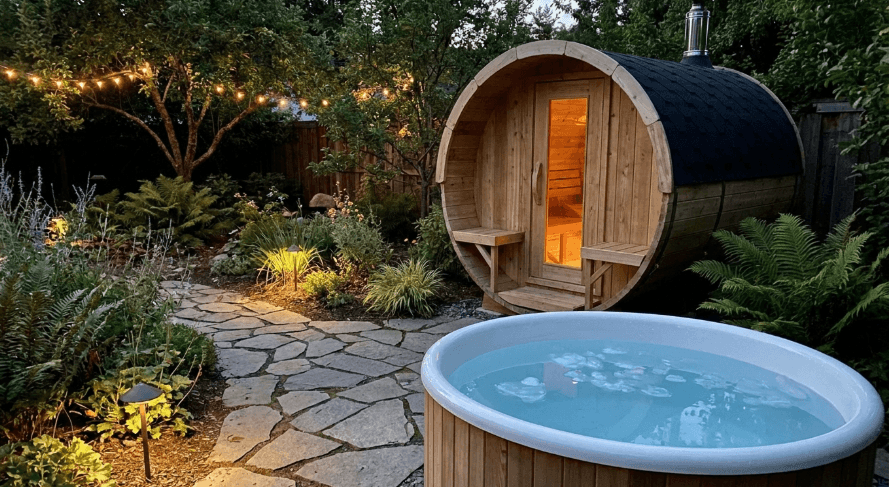
A barrel or cabin sauna going outside needs a level, well-drained pad, whether that is compacted gravel, pavers, or a small concrete slab, and grading that correctly is where DIY installs most often go wrong. An unlevel pad puts uneven stress on the wood cradle over time and can cause the staves to shift or gap. A homeowner confident in basic landscaping work can grade a small gravel pad over a weekend, but anyone unsure should treat pad preparation as the one part of an otherwise DIY-friendly project worth hiring out.
What Tools and Time Should a DIYer Actually Budget?
Most panel and stave kits need only a drill or impact driver, a rubber mallet, a level, and a basic wrench set, tools already in most home toolboxes. A one-person infrared cabin typically goes together in two to four hours, a two or three person barrel or cabin unit in a full day, and that estimate roughly doubles for a first-timer working alone rather than with a second set of hands. Reading through the full assembly manual before the delivery truck arrives, rather than after, is the single biggest time-saver DIYers report after finishing the job.
Scenario: A Household Splitting the Work Between DIY and Hired Help
A common middle path, especially for a small barrel or cabin sauna, is splitting the project rather than choosing one approach for everything. The homeowner assembles the cabin itself over a weekend, handling the panel or stave work personally, while an electrician handles only the circuit run and final heater hookup, and in some cases a landscaper or handyman preps the outdoor pad separately. This approach usually costs less than a single full-service package because each specialist is only billing for the specific piece they are best suited to, rather than marking up the whole project as one bundled job. It does require a bit more coordination, since the cabin assembly, electrical work, and any pad preparation need to happen roughly in the right order, but for a small-space project that is not especially complex to sequence. Households that are comfortable with basic tools but not confident around electrical work, or that want to save on labor without taking on a job with real safety stakes, tend to find this split approach the best balance of cost and peace of mind. It is worth asking an electrician directly whether they are willing to handle just the wiring on a customer-assembled unit, since some installers prefer to quote the whole job together rather than split scope.
Frequently Asked Questions
Can a beginner assemble a sauna kit without professional help? Most panel-built kits for one or two people are designed for a homeowner with basic tools and a weekend to spare. The main task that regularly requires a professional is any new 240V electrical circuit for a traditional heater.
How much does professional sauna installation typically add to the cost? Full-service installation generally adds several hundred to over a thousand dollars depending on unit size and whether a new circuit is required. Hiring an electrician just for the wiring while assembling the cabin yourself usually costs less.
Is a DIY sauna install safe for a renter? A plug-in infrared cabin on an existing outlet is generally renter-friendly since it requires no permanent changes. Anything requiring a new circuit or permanent venting typically needs landlord approval.
What tools does a DIY sauna kit assembly require? Most panel kits need a drill or impact driver, a rubber mallet, a level, and a basic wrench set. A second person makes panel alignment considerably easier, especially on curved barrel sections.
When does professional installation make the most sense? It makes the most sense for a traditional heater needing new wiring, for an outdoor unit requiring a leveled pad, or for a buyer without a free weekend who would rather pay to have it handled correctly.
References
- Does the Combination of Finnish Sauna Bathing and Other Lifestyle Factors Confer Additional Health Benefits? A Review of the Evidence, Mayo Clinic Proceedings, 2023
- Clinical Effects of Regular Dry Sauna Bathing: A Systematic Review, Evidence-Based Complementary and Alternative Medicine, 2018
- Benefits and risks of sauna bathing, The American Journal of Medicine, 2001
- UL Solutions, electrical and appliance safety listings